I may not have the wealth to be a bona fide patron of the arts. You may not find my name on donor lists. But I do buy tickets (often). I have since the 80s. And I’ve been known to say or send kind words to those whose work I appreciate. I have a few such words today for Robert Lepage.
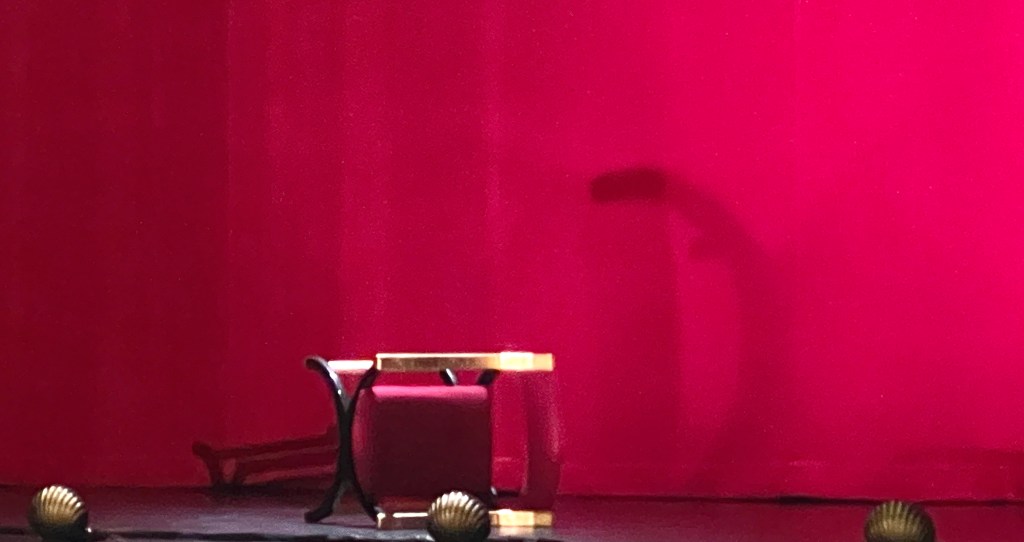
I went to see a collaborative work by Ex Machina (led by Robert Lepage) and Coté Danse (led by Guillaume Coté) last month at Place des Arts in Montréal. Hamlet. You know the story, a play within a play, the famous soliloquy, almost everyone dies at the end (it’s a Shakespeare tragedy, after all). This time, the story was told without a single spoken word. And it was told beautifully. By nine dancers (including Guillaume Coté as Hamlet), through stage direction and set design by Robert Lepage, and with original music by composer and sound designer, John Gzowski.
I have probably seen more of Robert Lepage’s work than any other Canadian in the performing arts. Certainly, some I have liked more than others and yes, there have been flaws worthy of criticism. No matter what, though, if Robert Lepage is putting something on and I am able to see it, I do. Hamlet last month prompted me to look back at his body of work, to call back to memory what I had seen, since my first ticket to one of his shows (in Vancouver in 2002). This is what I came up with:
- The Far Side of the Moon — no love is like first love, as they say, so this one made its mark.
- The years that followed — The Andersen Project; The Blue Dragon; The Image Mill; Playing Cards Spades; Needles and Opium; The Library at Night, and Coriolanus. Each kept me going back to his work.
- 887 — An incredible solo performance, which introduced me to “Speak White” by Michèle Lalonde (there is a powerful six-minute film adaptation of the poem, no matter how little French you understand, and a written translation of the poem here). I saw this play twice, it was so good.
- Finally, Frame by Frame — another collaboration with Guillaume Coté and one of the best performances I have seen in my life.
Something that may be out of view to newcomers to Robert Lepage’s work is his steady pushing of boundaries on stage for more than 30 years. He has been widely recognised for his set design and use of multi-media and technology in the performing arts, for his layering of multiple narratives, for his experimental approaches to story-telling on stage.
If you’re interested in more than a few words about Robert Lepage and his work, check out Ex Machina. And next time he is bringing something to town, trust me, go see it.
Photo above: the opening curtain at the production of Hamlet at Place des Arts last month.
 a few words ... from Montréal