Moonshine. Their story began with Pierre Kwenders and Hervé Kalongo in 2014, as a house party following a full moon: “The essence of Moonshine came out of parties we used to throw in our kitchens … one of the reasons we started Moonshine [was] to share that with more people who felt like us, and who didn’t have access to such sounds or vibes” (from an interview with Bubblegum Club, a South African Cultural organisation).
I went to my first Moonshine event looking for African house music. I found it. What I also found was “a place where people wouldn’t feel judged, where they could be whoever … they want to be … black, white, yellow, red, or green, whatever it is, any sexual orientation …” (Kwenders in an interview with Vogue magazine).
A brief interlude, if I may: My first experience of “a place where you could come and be yourself … just dance and listen to the music” (Vice magazine) was during my teen years at the Twilight Zone in Toronto and it instilled in me a compass that I have followed since, including to my first Moonshine.
My most recent Moonshine? It was part of the Mural Festival in Montréal (held every June, on in the city as I write this). Moonshine has been described as a global movement, expanding across North and South America, Europe and Africa. Check out this page for the dates of future events, to listen to Moonshine on the airwaves, or to find out more about what they do and why.
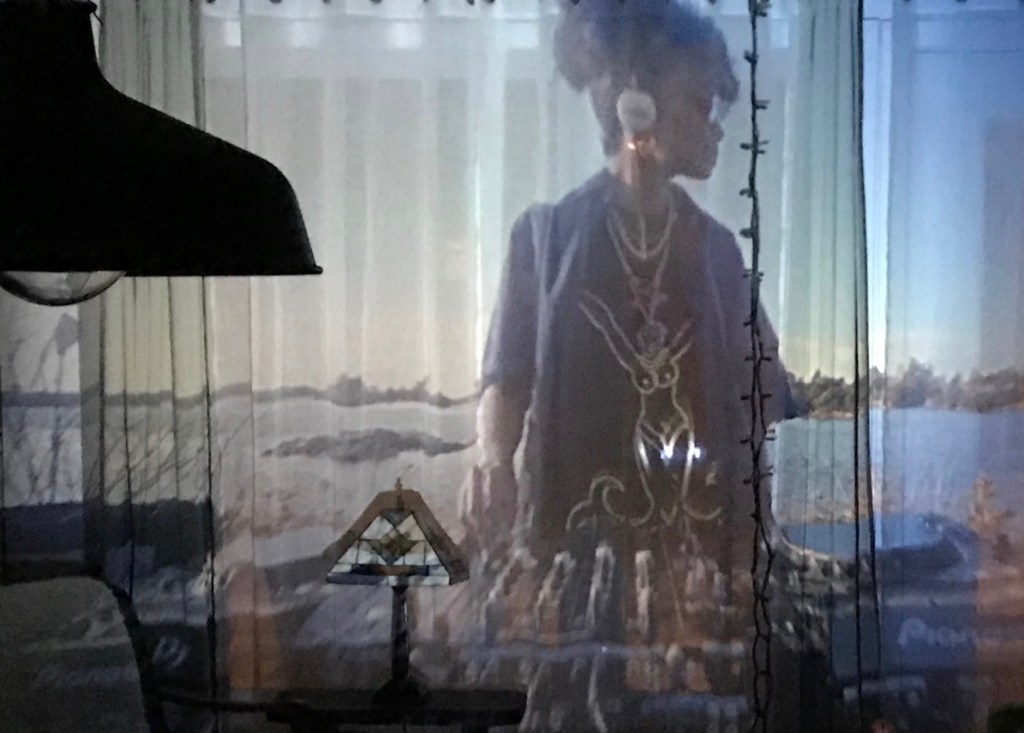
The DJ in the image above is San Farafina (with thanks for her okay to share it), one of the founding members of the Moonshine collective, although I didn’t know that when I took the photo. I was in my living room one night last year, at the end of a week of unpacking, after my move to Montréal. I didn’t have it in me to go out, so I pulled up a few of my favourite sets from hinter live, connected to the speaker, put the projector on the kitchen table (very much in the spirit of Moonshine, it turns out).
Thank you, Moonshine. Shine on, shine on.
 a few words ... from Montréal